Finnish kitchen brand family Fredman Group, founded in 1997, manufactures high-quality kitchen supplies and food packaging solutions. The group consists of two sister companies and employs around 70 people in Espoo and at its factory in Rauma. In 2024, the company’s revenue reached €30.6 million.
When a company’s sales consist of hundreds of customers, products, and product groups whose demand fluctuates seasonally, the level of complexity is high. According to Peter Nyman, Business Director at Fredman Group, Wisestein SCM® software has played an important role in enabling growth:
“We have ambitious growth targets both in Finland and especially in exports. Over the past four years, we have grown by 10–20%. People are our most important resource, but business is largely managed based on numbers. Wisestein SCM® has played a central role in leadership, monitoring, reporting, and budgeting.”
Shared understanding laid the groundwork for developing reporting and budgeting
When Nyman started as Business Director at Fredman Group four years ago, Fredman and Wisestein (SCM Best Oy) had already been working closely together for 15 years.
“When I stepped into this role with new ideas, Wisestein’s Ray Blomqvist already had a deep understanding of our company, our products, and our business. We quickly found common ground, and Ray advised us on what could realistically be implemented within the system. We were able to move forward very quickly,” Nyman says.
During the past two years, the collaboration has focused on customer-level sales budgeting and monitoring, as well as the use of reporting and SCM tools.
“We decided to take our cooperation to the next level. This meant making BI reporting as simple and user-friendly as possible while also developing S&OP budgeting,” Nyman explains.
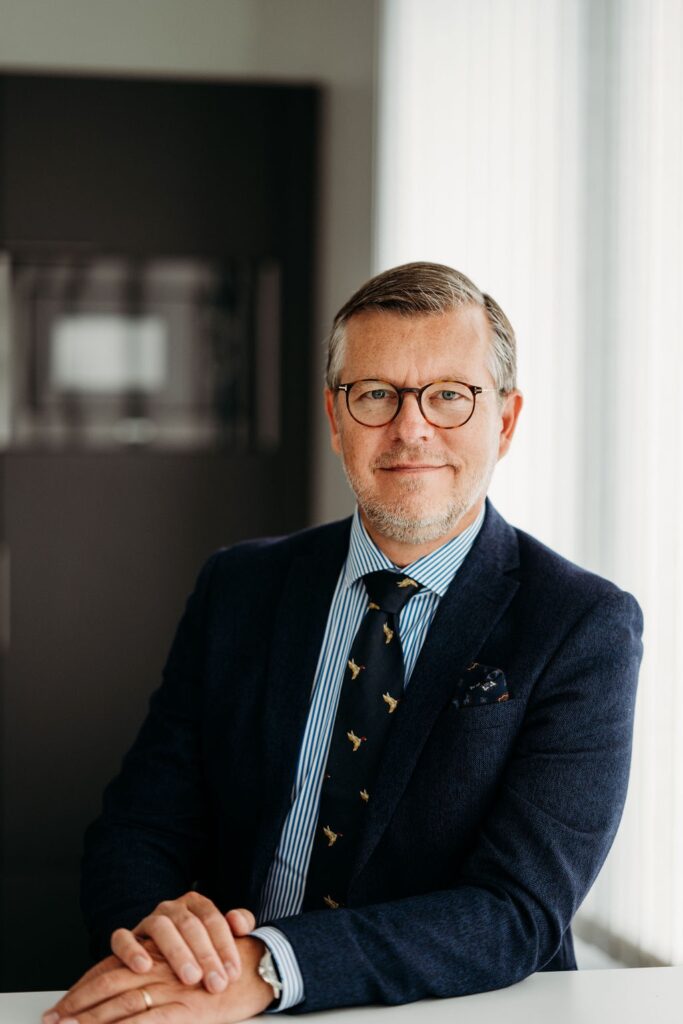
Peter Nyman, Business Director at Fredman Group. Photo: Fredman Group
A new level of influence for sales teams
Until two years ago, budgeting was done as a single overall entity. With the new approach, the goal was to create a system where subsidiaries could be budgeted separately and salespeople could prepare budgets at both the customer and product level.
The challenge was to find a sufficiently simple system that would allow salespeople to quickly and smoothly budget both large and small customers as well as large numbers of products. The new system has given sales teams a new level of influence.
“We have hundreds of customers and just as many products — a huge amount to manage. Previously, we had a single budget that was carried over to the next year with minor adjustments. At that time, salespeople didn’t have the same level of influence over the budget,” Nyman explains.
The Wisestein SCM® S&OP Budget tool enables large customers to be budgeted individually, while smaller customers can be budgeted as a group. Salespeople can prepare their budgets by customer and product, allowing for much more precise planning.
“When a salesperson prepares a budget for one customer and ten products, they can really analyze how the past year went and why, and what they want to achieve in the coming year. This is exactly the kind of thinking companies want from their sales teams, and Wisestein SCM® supports that.”
The software also makes the reasoning behind decisions easy to track:
“If the budget differs from last year’s actual sales, we can find the explanation in the system for why the sales manager made that assumption. This helps a lot when monitoring results and refining plans,” Nyman says.
The new approach has helped manage the complexity involved in forecasting.
“Making forecasts with this number of products — with both our own production and purchased products — is not always easy. There are major differences between product groups, and products vary significantly in terms of sales. Forecasting is nevertheless extremely important, and we invest heavily in it. Decision-making becomes easier when salespeople can prepare their own forecasts and compare them with the budget and last year’s results.”
The first version of the Wisestein SCM® S&OP Budget tool was introduced two years ago. Since then, two new versions have already been developed.
“During the development phase, there were many questions that needed to be solved. Collaboration with the Wisestein team played a key role. They have a deep understanding of both the SCM system and S&OP thinking. Even the first budgeting cycle with the new system went well,” Nyman says.
Sales teams have embraced the tool enthusiastically, and the implementation process was quick and smooth.
“The final version currently in use is very simple. Salespeople were able to get started with just a short training session. Once plans are created in the system based on the previous year’s results, using it is very easy,” Nyman explains.

Fredman’s product range includes many iconic kitchen products, such as Elmu®kelmu cling film. Photo: Fredman Group
A clear overview for sales management and monitoring
From a management perspective, the new approach enables more structured goal setting, rollout, and monitoring.
“If we want to reach a certain destination as a company, we need a clear target and goal. The new budgeting model has enabled us to discuss next year’s targets as a team and create a shared understanding of what goals we set and how we plan to achieve them.”
The Wisestein SCM® S&OP Budget tool is integrated and automated with the company’s BI reporting system. In SCM BI reporting, the budget can be compared with actual sales and forecasts at different group and salesperson levels.
“Throughout the year, we compare results, budgets, forecasts, and last year’s performance in our meetings. We discuss short- and long-term goals and plans and reflect them against marketing, advertising, and sales promotion activities. Good reports and monitoring also help sales managers in their discussions with customers.”
Although the company’s sales and finance departments are the main users of Wisestein SCM® software, many other company reports are also based on data from the SCM system.
“Budgeting is at the very core of a company. Everything starts with sales: the revenue and profit we expect for the coming year determine how much cash we have available to develop the business. In one way or another, everyone in the company benefits from the information we get from the Wisestein SCM® system,” Nyman concludes.
Looking ahead to future development
Collaboration with the Wisestein team has been smooth, and answers to questions have always come quickly:
“In ICT matters, we need answers fast. Any changes or corrections need to be resolved the same day or the next. Wisestein has met our needs: they have a strong customer service mindset and respond quickly,” Nyman says.
Although the current version already serves the company well, development does not stop here:
“Appetite grows with success, and business and circumstances never stand still. The goal is always to continue developing and making things even better. We’re already thinking about the next level and how to get there.”
New ideas and thoughts emerge and evolve into new needs. While the aim is to make budgeting and monitoring even more precise, the system must still deliver information just as easily — or even more easily.
“You can always make budgeting more precise, but not more complicated. At the same time, the more detailed the information you want, the more complexity increases. At every turn, there are multiple factors to consider, and every decision affects what the system can do and how it works. That, in turn, affects its usability and the benefits it provides,” Nyman reflects.
“We’ve already discussed what the next version might look like. Artificial intelligence and how it can be utilized also open up interesting possibilities.”
Would you like to learn how Wisestein SCM® can help your company succeed?
Book a demo or contact us at info@wisestein.fi.